The Tech Resume Guide That Gets Interviews
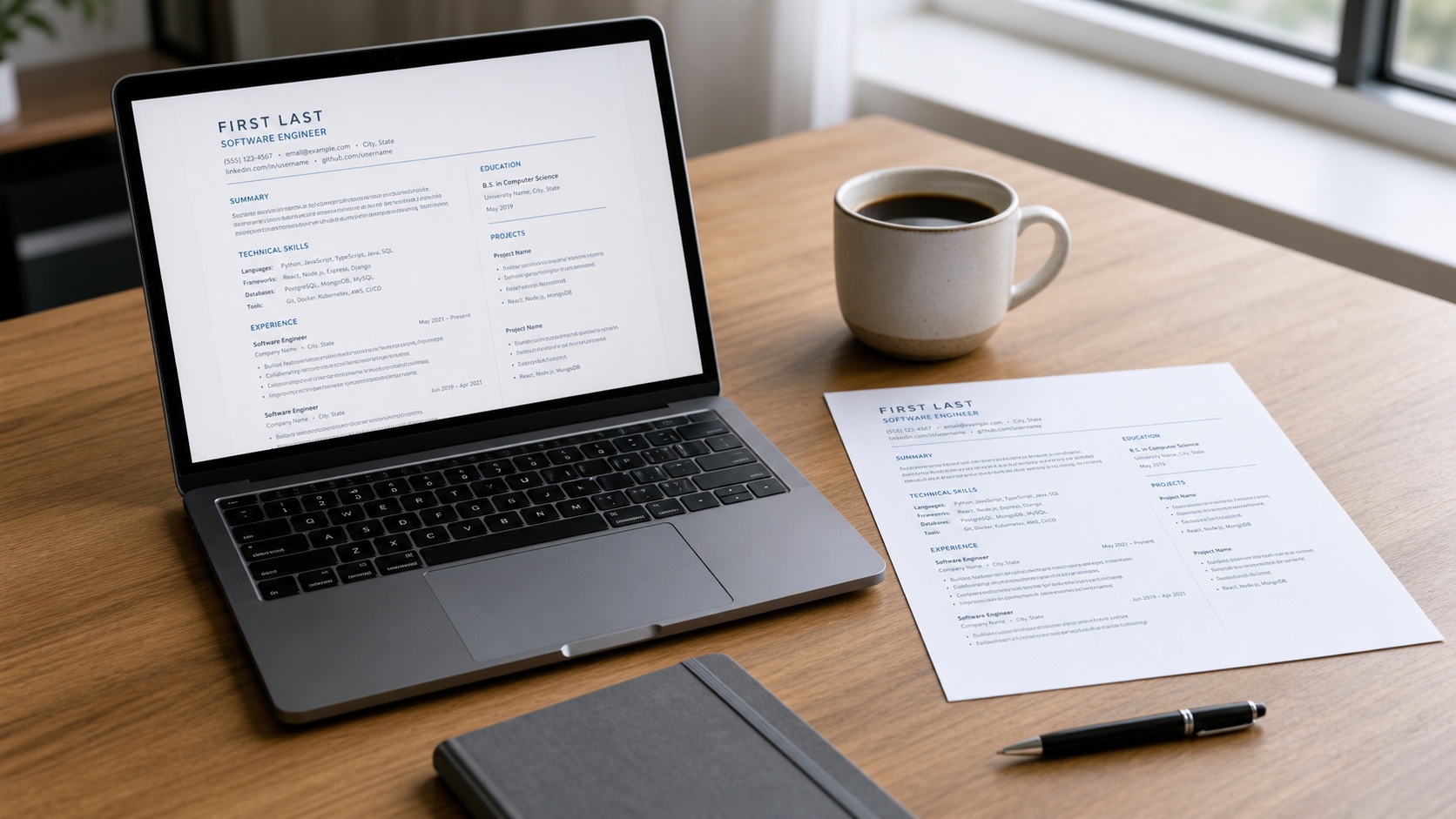
A strong tech resume is the document that decides whether you even get to interview, and most are rejected in seconds for reasons you can fix. This guide is for engineers whose applications keep vanishing into the void. You will learn the format recruiters actually scan, how to write bullets that show impact, how to get past the ATS, and what to cut so your best work stands out.
What a recruiter does in six seconds
A recruiter skimming your tech resume spends only a few seconds on the first pass — the number often cited is around six — scanning for a quick yes or no. They look at your most recent title, the companies or projects, your stack, and whether anything signals real impact. If those are buried, you are filtered out before anyone reads a full sentence.
That is not unfair; a recruiter may be facing hundreds of resumes for one role. Your job is to make the relevant facts impossible to miss in that first skim, then reward a closer read with specifics.
The one-page format that works
For anyone with under ten years of experience, keep it to one page. Recruiters and hiring managers skim, and a tight page respects that. Use a clean, single-column layout — fancy multi-column designs often confuse the software that parses your resume.
A reliable section order, top to bottom:
- Header: name, a one-line title, email, city, and links (GitHub, portfolio, LinkedIn)
- Optional one-line summary — only if it says something specific
- Experience: most recent first, written as impact bullets
- Projects: especially valuable for juniors and career changers
- Skills: the languages and tools you can actually discuss
- Education and certifications
Put the section that sells you best highest. For a new grad that is often projects; for an experienced engineer it is experience.
Impact bullets: the X-Y-Z formula
The single biggest upgrade to most tech resumes is turning duty bullets into impact bullets. A useful template, popularized by Google recruiters, is the X-Y-Z formula: “Accomplished X, as measured by Y, by doing Z.”
Compare the two versions of the same line:
- Weak: “Worked on the checkout API.”
- Strong: “Reduced checkout errors by about a third by adding request tracing and retries to the checkout API.”
Start every bullet with a strong verb, name the result, and say how you achieved it. If a bullet could sit on a hundred other resumes unchanged, rewrite it until it is unmistakably yours.
Quantify everything you can
Numbers make claims believable and memorable. “Improved performance” is forgettable; “cut page load from 4 seconds to under 1” is not. You do not need dramatic figures — honest, specific ones are enough.
Things you can usually quantify:
- Users, requests, or data volume you served
- Latency, load time, or throughput you improved
- Time saved for yourself or the team
- Errors, incidents, or bugs reduced
- Test coverage added, or team size you worked across
If you truly cannot measure something, describe the scope specifically — “used daily by the whole support team” still beats a vague claim. Never invent numbers; a good interviewer will ask, and these same bullets become your STAR stories later.
Beating the ATS
Most applications first pass through an applicant tracking system (ATS) that parses your resume and matches it against the job description. You beat it not with tricks but with clarity and honest keyword alignment.
- Use a simple single-column layout; skip tables, text boxes, and images for key content.
- Send a PDF unless the posting specifically asks for another format.
- Mirror the exact wording of key skills from the job post — when you genuinely have them.
- Use standard headings like Experience, Projects, and Skills.
- Keep critical details out of the header and footer; some parsers drop those regions.
White-text keyword stuffing is an old myth — it gets flagged and reads as dishonest. Just make sure the real skills you have are actually written, in plain text, on the page.
What to cut
Every line that does not help you is competing for space with the lines that do. Cut ruthlessly. Common things to remove:
- A generic objective statement that says nothing specific
- “References available on request” — assumed, and a waste of a line
- A wall of every technology you have touched once
- High-school details once you have a degree or real experience
- Dense paragraphs, a photo, and your full street address
When in doubt, cut. A tight one-page resume a recruiter can skim beats a dense two-pager every time.
Tailoring without rewriting from scratch
You do not need a brand-new resume for every job, but a generic one applied everywhere underperforms. Keep one strong master resume, then spend ten minutes tailoring the top third for each role — the part a recruiter reads first.
Tailoring is quick when you keep it focused:
- Reorder skills and bullets so the most relevant ones appear first.
- Match the wording of a few key requirements you genuinely meet.
- Trim anything irrelevant to this specific role.
Pair the tailored resume with a strong profile; our guide to LinkedIn for developers covers the other half of how recruiters find you.
Frequently asked questions
How long should a tech resume be?
One page for anyone with under roughly ten years of experience. Recruiters skim, and a focused single page almost always outperforms a padded two-pager. Go to two pages only if you genuinely have senior, relevant depth that will not fit.
Do I need a cover letter?
Often it is optional, and a weak one rarely helps. If the role clearly matters to you, a short, specific note about why you fit can add a little signal. Do not lose sleep over it — your resume does most of the work.
Should I include personal or side projects?
Yes, especially if you are a junior or career changer. Treat projects like experience: write impact bullets, link the code or a live demo, and say what you built and why. A shipped project can outweigh a thin work history.
Is a PDF or Word document better?
Send a PDF unless the posting asks for Word. A PDF preserves your formatting across devices and parses reliably in most modern applicant tracking systems. Name the file clearly, such as your name plus the role.
Your resume has one job: get you into the room. Make it skimmable, lead with impact, quantify honestly, and cut the rest. Once it is landing interviews, shift your energy to the rounds themselves — start with our cornerstone guide and walk in prepared.
Last updated: July 6, 2026


Comments
Post a Comment